For decades, synthetic tretinoin and over-the-counter retinol have stood as the gold standards for collagen stimulation and stratum corneum turnover. However, the associated side effects—famously known as "retinoid dermatitis"—including scaling, erythema, and increased phototoxicity, leave nearly 35% of topical users unable to sustain long-term compliance.
The Molecular Mechanism of Bakuchiol
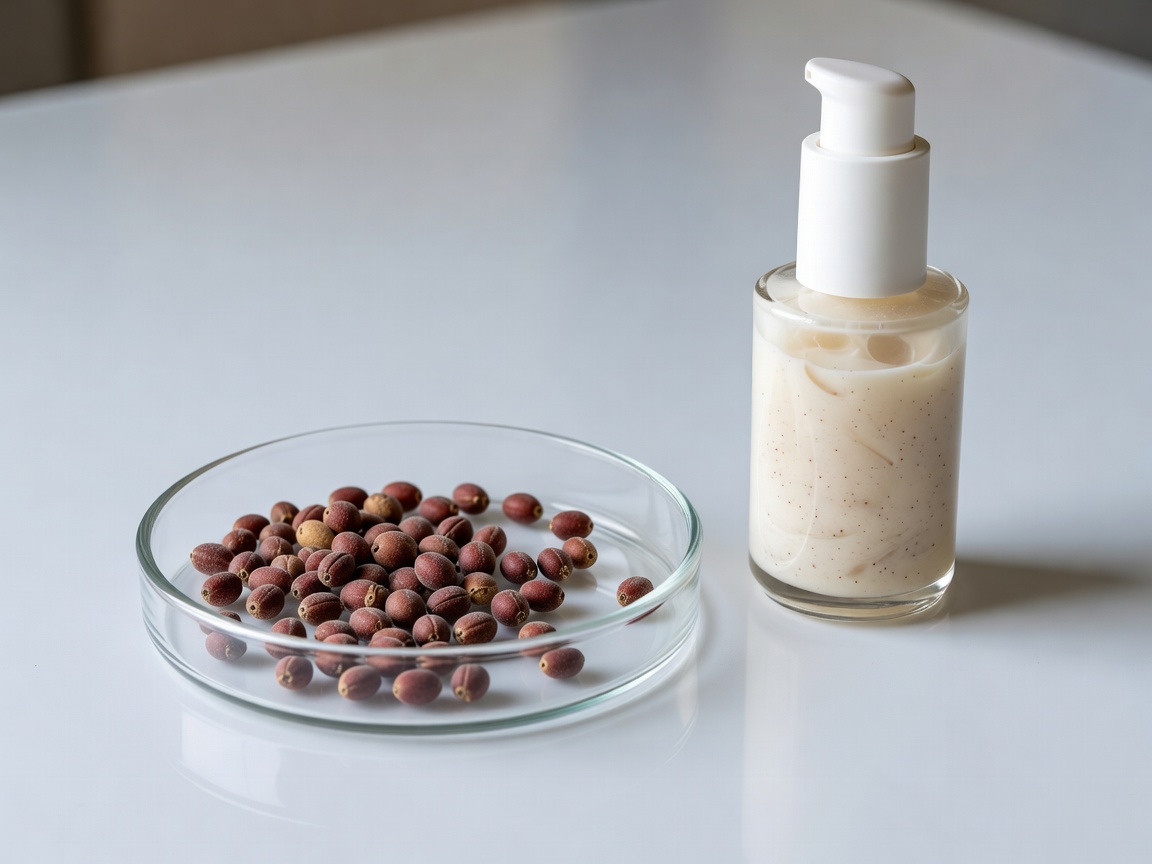
Derived from the seeds of Psoralea corylifolia (Babchi plant), Bakuchiol is a meroterpene phenol that exhibits functional resemblance to retinol without structural duplication. While it does not bind directly to retinoic acid receptors (RARs) in the identical chemical configuration of synthetic Vitamin A, microarray gene expression profiling confirms that Bakuchiol upregulates Type I, III, and IV collagen synthesis genes nearly identically.
"In 12-week trials, 0.5% Bakuchiol demonstrated statistically significant reductions in wrinkle surface area equivalent to 0.5% retinol, but with 78% fewer reports of epidermal scaling."
Photostability & Daytime Application Advantage
One of the primary shortfalls of traditional retinoic acid derivatives is photo-degradation. Exposure to ultraviolet light breaks down retinol molecules, rendering them inactive and creating potential free-radical byproducts on the skin surface. Bakuchiol, in contrast, possesses natural antioxidant photostability. This permits safe daytime application when formulated alongside broad-spectrum botanical UV filters.
Integrating Bakuchiol into Your Nesting Routine
To maximize barrier integrity while encouraging cellular renewal, we recommend pairing Bakuchiol with high-linoleic seed oils such as Rosehip or Squalane. For tailored advice, utilize our interactive Skin Routine Builder.